
ARGENTINA- COUNTRY WITH HISTORY AND A LOT OF CARAMEL
- Feb 24, 2025
- 6 min read
Our first time in South America was absolutely magnificent. We spent over two weeks in Argentina, checking off a long list of destinations: Patagonia, Buenos Aires, and Salta Province. We spent many hours on planes, made countless memories, met new faces, and indulged in a lot of Dulce de Leche (Argentine caramel). After such an experience, I feel a strong desire to see as much of the world as possible. And yes, this time I am 100% decided that I need to add Spanish to my repertoire of languages.
Every trip we take, I always have a list of top places I want to see. One of them is right here, 4km above sea level, and it is absolutely amazing beyond belief.

The Salinas Grandes (with 'Salina' meaning salt flat in Spanish) is a vast salt flat located in central-northern Argentina, stretching across the borders of 4 provinces. To get there, we spent many hours on a bus, enjoying interesting stories and tasting local delicacies that can't be taken out of the country. And of course, the taste of that crystal-clear water at our final destination was saltier than salty.
Let me start from the beginning of our journey.
From day one, we had memorable experiences. Our flight had two connections: one in Germany and one in Brazil. My mum was traveling with us for the second time. We met her at Frankfurt Airport, and we were supposed to take the transatlantic flight together to Brazil first. After a long flight, we had just one tiny flight left to Buenos Aires, and that was it... but suddenly, my mum's flight had already departed. It turned out we had different connections for the last leg.
Oh my word, it was so stressful, and that's when I decided we needed to learn Spanish as soon as possible. You'd think there would be people at the airport who spoke English, but I'm telling you, nobody could even say "no" or "yes." We left Mum in Brazil, but she reached us later the same day on another plane, with a big story to tell and no money spent—Mum rocks!
Despite the initial hiccup, our start in Buenos Aires was fantastic. The weather, the food, the people, and the atmosphere were all incredible – it felt like we were in a completely different world. After spending four days in the capital, we left with some amazing memories: visiting the Recoleta Cemetery (the most beautiful and unusual place I've ever seen), exploring the Japanese Garden, marvelling at the iconic Ateneo Library, browsing the local market, and savouring delicious meat at La Estancia Restaurant. The restaurants in Buenos Aires are on another level, offering a vibrant and diverse culinary scene.
One particularly memorable experience from this big city was one evening when everyone was celebrating winning a football cup. The streets were filled with people, flags, and songs. Football is a way of life there. The city is home to some of the most iconic football clubs in the world, and their matches are a spectacle of colour, noise, and emotion. Although we didn't get to see the match, the celebration afterward was spectacular.


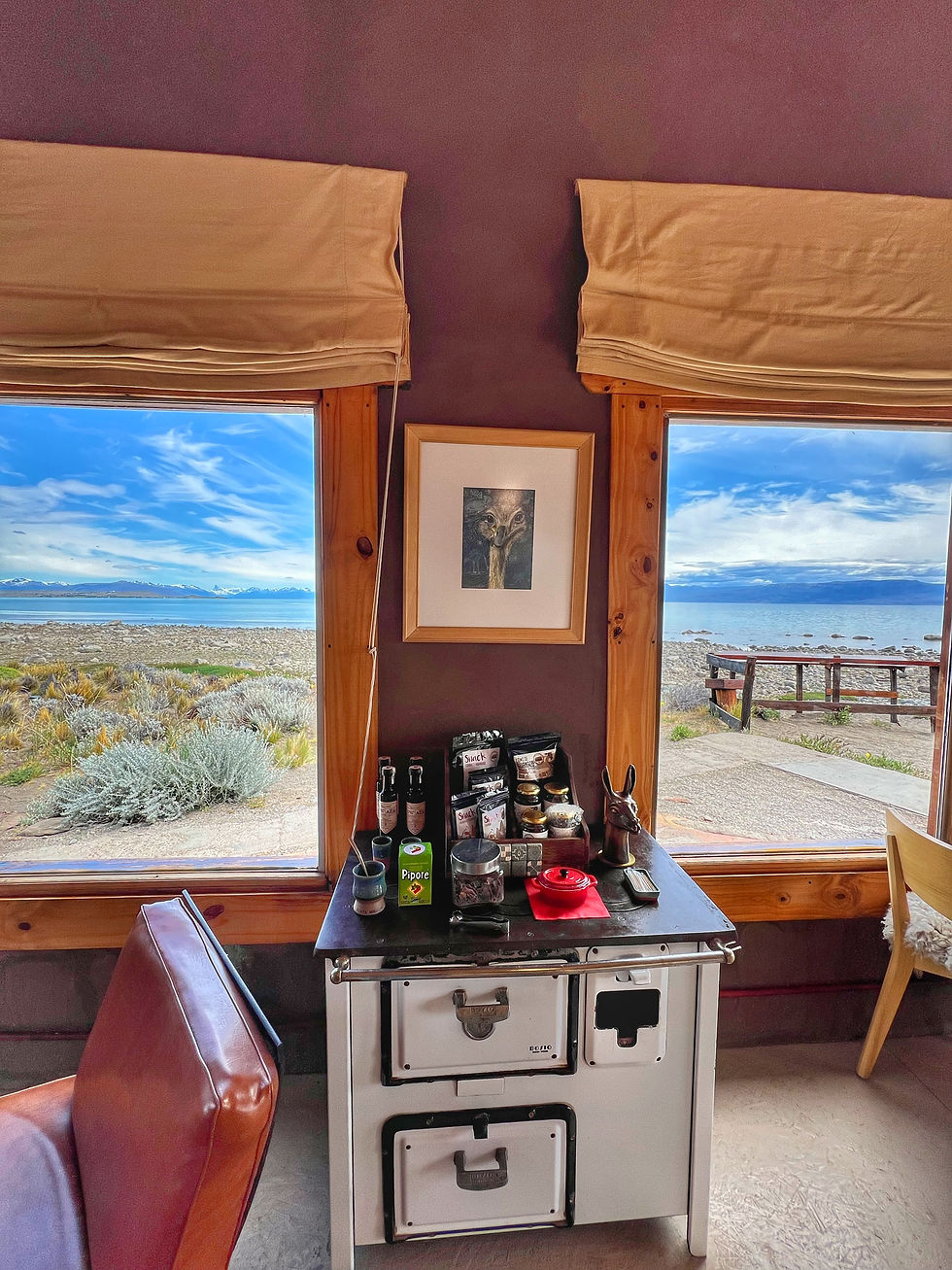
Patagonia. After the fantastic start to our holiday, we moved on to our next stop: Patagonia, specifically El Calafate. The city welcomed us warmly, and we had a very cozy stay at Posada Larsen. We spent 5 days in this charming area, and it was undoubtedly worth every moment. It was a completely different experience from the big city. The star attraction here is the Perito Moreno glacier. If you're planning a trip to Argentina, it is an absolute must-see. This natural wonder will leave you in awe of its power and beauty.
There are many ways to visit this place, but I believe the best and cheapest option is to rent a car. Planning your own time is so much better. And don't forget cash! You need to have cash everywhere. While the entrance to the park can be paid by card, having cash allowed us to skip long lines and saved us a lot of time.
Since we had a car for a couple of days, we took the opportunity to drive to El Chaltén, another very popular destination. Nestled in the heart of Los Glaciares National Park in Argentina, it is a haven for hikers and outdoor enthusiasts. We didn't spend much time hiking, as we were with our 5-year-old boy. That's why I hope to return someday. Laguna de los Tres is still on my bucket list. However, the majestic peak of Fitz Roy and the sheer power of nature remain vivid in my memory.


Last place we visited in El Calafate was the Walichu Caves. These caves hold secrets from the past, dating back around 4000 years, with ancient cave paintings left by the indigenous Tehuelche people. It was an interesting walk, enhanced by headphones that narrated the entire story. Additionally, enjoying coffee with a stunning view made our day.
The rest of our time in El Calafate was spent exploring, visiting restaurants, and checking out museums. The Argentine Toy Museum was a particularly interesting experience. It's a delightful place for people of all ages, offering a nostalgic trip down memory lane for adults and a fascinating glimpse into the world of toys for children. As for restaurants, we went to Viva la Peppa Creppes & Passion at least three times for lunch. Yes, it's a pancake place that we absolutely adored. With so much meat in this country, it was delightful to have this variety. One evening, I even had a dinner consisting of just lots of ice cream. Why not? It was a holiday afterall.
So, with just as many and even more memorable experiences from this city, let's move on to the next adventure.
Salta Province.
Our last domestic journey was quite an adventure. We arrived at the airport at least three hours before our flight, only to find out it was cancelled. With just two days left in our trip, they offered us a flight the next day, but there were no hotel options available since football had taken over the country at that time. Fortunately, one person spoke English, and we managed to get a spot on another flight later that day, so we didn't miss out.
Salta was a pleasant surprise – cozy, warm, and inviting. We spent one day by the pool, exploring the city, and enjoying a street show while having dinner. Tasting the national food was delightful after the stressful flight situation.
The next day, we had an excursion planned to see Salinas Grandes and Purmamarca. It was a long journey, but it was the cherry on top for me. Our guide was fantastic, and the drive up to 4 km with views of cacti was incredible. I was so happy to be there, "jumping" into all the photos I had seen. It was truly unique.
In Purmamarca, we had dinner, bought some souvenirs, and met locals. The world is just so beautiful and indescribable.


For the last days of our trip, we returned to Buenos Aires and stayed in a very cozy Airbnb apartment right by the river. Our final holiday days included visits to the Bernadino Rivadavia Natural Science Museum (with lots of dinosaurs), a Japanese restaurant (which greatly stimulated our desire to visit Japan), and Chinatown (where the food and desserts were a colourful experience).
Our last evening ended with a glass of wine from a small corner shop. That's it! Argentina is a fascinating country with a vibrant culture, diverse landscapes, and a rich history – it must be added to the bucket list.
"The more I see, the more I smile."
>P.P.
p.s.
Money – The Blue Market in Argentina, also known as the "black market," is an informal network of money changers who offer higher exchange rates for foreign currency than official channels. It's particularly popular in Argentina due to the country's economic instability and high inflation. Cash is King. You can use Western Union to withdraw money, but small cities are not an option, so it must be planned very well. In Argentina, it's easy to be a millionaire – 1 dollar is worth over 1000 Argentine pesos.
Fun facts about food- No vegetables in the breakfast buffet. Overall, breakfast in Argentina is a quick and simple meal, focusing on sweet flavours and often enjoyed with a hot beverage like mate or coffee. It's not very usual for us, so asking for vegetables like tomatoes or cucumbers definitely felt strange.
National Sport is Pato: Despite the popularity of football, Argentina's national sport is actually "Pato," a game played on horseback that combines elements of polo and basketball. ^Video is coming ^


Comments